

Quick answer: An automatic door closer in Phoenix storefronts pulls the door shut and controls its speed so it latches every time without slamming. A properly adjusted closer keeps cool air in, keeps dust and heat out, protects the door and frame, and helps meet accessibility requirements for opening force and closing speed. Call (623) 280-1112.
Every time a customer walks into your shop, office or restaurant, the door closer does its quiet job. When it works, nobody notices. When it fails, the door slams, drifts open, lets out expensive air conditioning or fails to latch at night. For business owners, a reliable automatic door closer in Phoenix is a small part that protects security, comfort and the customer experience. This guide explains how closers work, the benefits of a properly adjusted one, signs of trouble and what a professional installation looks like.
Affordable Lock & Key of Phoenix installs and adjusts closers through our automatic door closer installation service. Our commercial technicians are insured and certified, and we schedule work around your business hours.
How an Automatic Door Closer Works
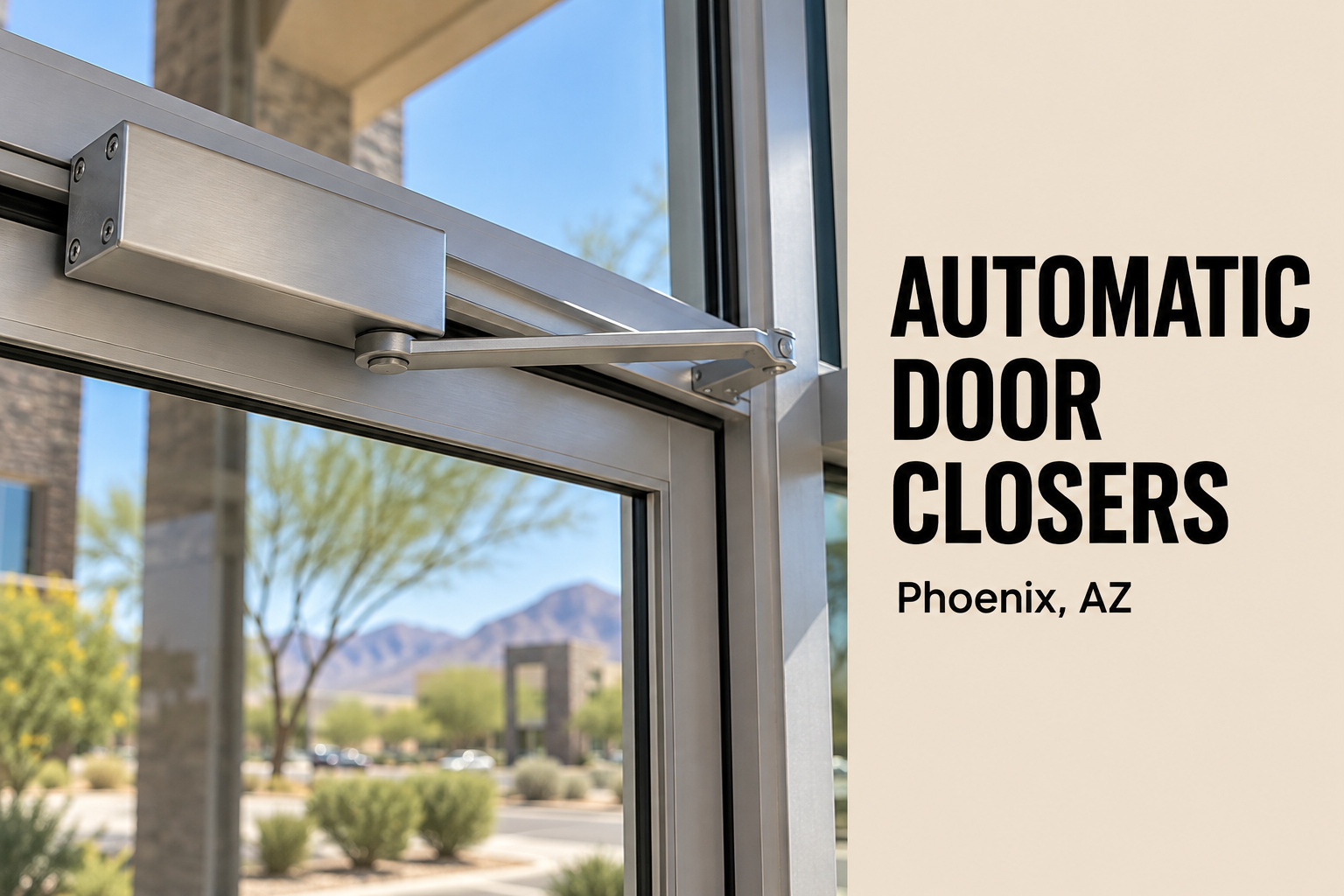
Most commercial closers are hydraulic. When the door opens, a spring inside the closer body is compressed. As the door is released, the spring pushes it closed while hydraulic fluid flows through small valves that control the speed. Adjustment screws set the sweep speed, latch speed and, on many models, backcheck, which cushions the door if it is thrown open.
Closers come in several styles: surface-mounted closers on the door or frame, concealed closers hidden in the frame header, and floor-mounted closers common on glass storefronts. Each style has strengths depending on the door type and appearance you want.
5 Essential Benefits of an Automatic Door Closer in Phoenix
1. Lower Cooling Costs
A door that drifts open lets cool air escape and hot air in. In Phoenix summers, that adds up quickly on your energy bill.
2. Better Security
A closer that latches the door every time means the lock actually engages, especially after hours.
3. Accessibility
Correct opening force and closing speed help people using wheelchairs, walkers or strollers enter safely.
4. Less Wear on Doors and Frames
Controlled closing prevents slamming, which protects hinges, glass, frames and locks.
5. A Better First Impression
A door that opens smoothly and closes quietly makes your business feel well cared for.
| Closer Type | Best For | Notes |
|---|---|---|
| Surface-mounted | Most offices and back doors | Easy to install and adjust |
| Concealed overhead | Storefronts with clean look | Hidden in frame header |
| Floor-mounted | Glass doors and lobbies | Installed under the threshold |
| Low-energy operator | Accessible entrances | Push-button automatic opening |
| Heavy-duty closer | High-traffic doors | Built for constant use |
Signs Your Automatic Door Closer in Phoenix Needs Attention
- The door slams shut or closes too fast.
- The door does not latch completely.
- Oil is leaking from the closer body.
- The door is hard to open, especially for customers with disabilities.
- The arm is bent, loose or making noise.
- Wind pulls the door open during monsoon storms.
Most of these issues can be fixed with an adjustment. Leaking closers, however, have lost hydraulic fluid and need replacement. Ignoring a failing automatic door closer in Phoenix can lead to damaged frames, broken glass and security gaps.
Is Your Storefront Door Slamming or Drifting Open?
Our commercial locksmiths adjust, repair and install door closers across the Valley.
Accessibility Basics for Door Closers
Accessibility guidelines set expectations for how doors open and close at public entrances. Closers should allow a door to be opened with reasonable force and close at a speed that gives people time to pass through. Specific measurements are listed in the ADA design standards, and our technicians adjust closers with those requirements in mind. For entrances where many customers use mobility devices, a low-energy automatic operator with a push button may be the best solution.
Professional Installation of an Automatic Door Closer in Phoenix
Installing an automatic door closer in Phoenix starts with choosing the right size and style for the door weight, width and location. Exterior doors that face wind or heavy traffic need stronger closers and often a parallel arm mount. The technician mounts the closer and arm, sets the spring power and adjusts sweep, latch and backcheck speeds. Finally, the door is tested many times to confirm it latches reliably without slamming. Before leaving, we show your staff how the automatic door closer in Phoenix should behave and what signs mean it needs a quick adjustment.
While on site, we can also check your locks, exit devices and strikes. If your entrance needs other work, see our commercial lock replacement service or read our article on commercial door locksmith services in Phoenix.
Choosing the Right Closer for Your Door
Picking an automatic door closer in Phoenix is not just about brand. The closer has to match the door. Wider and heavier doors need more spring power, while lightweight interior doors need less. Exterior doors that face prevailing winds benefit from a parallel arm mount and strong backcheck so gusts cannot throw them open. Glass storefronts often use concealed or floor-mounted closers to keep a clean look.
Traffic matters as much as size. A coffee shop or medical clinic may see hundreds of openings a day, which calls for a heavy-duty, commercial-grade closer built for constant use. A back office door that opens a few times a day can use a standard model. Our technicians weigh all of these factors and recommend a closer that will last, not just one that fits the holes already drilled in the door.
Repair, Adjust or Replace?
Many closer problems are solved with a simple adjustment of the speed valves or spring power, which takes only a few minutes. A loose or bent arm can often be tightened or replaced on its own. If oil is leaking or the closer no longer controls the door at any setting, replacement is the right call, since the hydraulic seals inside cannot be rebuilt on site. We always tell you which option fits before doing the work.
Many business owners combine a closer visit with a quick check of the rest of the entrance. Loose hinges, worn weatherstripping and a strike plate that no longer lines up all make a closer work harder than it should. Fixing those small issues at the same time helps a new automatic door closer in Phoenix last longer and keeps the door latching smoothly through the hottest months of the year. It also cuts down on repeat service calls, which saves you time and money over the life of the door.
Phoenix Heat, Wind and Door Closers
Hydraulic fluid becomes thinner in heat and thicker in cold. In Phoenix, extreme summer temperatures can make a closer close faster in the afternoon than it does in the morning. Monsoon winds can catch a door and overpower a weak closer, bending the arm. Choosing a closer rated for exterior use, adding a backcheck feature and checking adjustment seasonally keep doors working well all year.
- Have closers checked before summer and before monsoon season.
- Watch for oil stains on the closer body or floor.
- Do not prop doors open by wedging the arm.
- Replace bent arms promptly.
- Use hold-open closers if the door must stay open during business hours.
Where We Install an Automatic Door Closer in Phoenix
We serve businesses in Downtown Phoenix, Midtown, Biltmore, Arcadia, Camelback Corridor, Deer Valley, Ahwatukee and North Phoenix, plus Scottsdale, Tempe and Glendale. Visit our Phoenix locksmith page for coverage details. For more ideas on protecting your property, read our business lock security guide.
Frequently Asked Questions About an Automatic Door Closer in Phoenix
What does an automatic door closer do?
It closes the door automatically and controls the speed so the door latches without slamming.
Why is my door slamming shut?
The closer speed may need adjustment, or the closer may be leaking fluid and need replacement.
Can a locksmith install an automatic door closer in Phoenix?
Yes. Our commercial locksmiths install, adjust and replace door closers for businesses across the Valley.
How long does installation take?
Most single closers are installed and adjusted in one to two hours.
Does heat affect door closers?
Yes. Heat thins hydraulic fluid and can make doors close faster. Seasonal adjustment helps.
What if my closer is leaking oil?
A leaking closer has lost fluid and should be replaced, since it can no longer control the door properly.
Do door closers need to meet ADA guidelines?
Public entrances should follow accessibility guidelines for opening force and closing speed. We adjust closers with those in mind.
Can you add a hold-open feature?
Yes. Many closers offer hold-open arms, and we can install them where appropriate and allowed.
What is the difference between a closer and an automatic operator?
A closer only closes the door. An operator opens it automatically, usually with a push button or sensor.
How much does an automatic door closer in Phoenix cost?
Cost depends on the closer type, door and mounting. We give a clear quote after checking the door.